Why Real Stories Matter More Than Ever

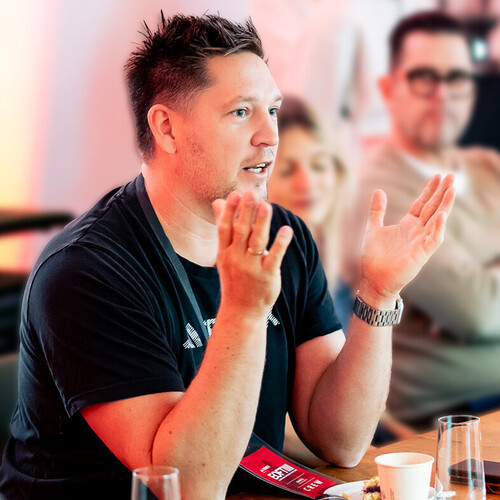
A conversation with Joachim "Helli" Hellinger

25 years of EOFT. For us, that means 25 years of real stories, real people, real emotions. At a time when content is produced by the second and AI is steadily blurring — and pushing — the line between real and artificial, one question is becoming increasingly important: What truly moves us, and why?

Our Founder and CEO Joachim "Helli" Hellinger shares his perspective on how filmmaking and programming have evolved, what EOFT stands for, and why authenticity is more valuable today than ever before.

You used to see a photo and think: that happened. Today you ask yourself: is that even real?

How has filmmaking changed over the past 25 years?

Dramatically — and in every direction. When we started out, making films was costly, time-consuming, and inflexible. Big cameras, a ton of equipment, very little room to improvise. Today, cinema-quality footage can be shot on a smartphone. Drones deliver angles that used to require a helicopter.

That's opened everything up. Filmmakers are more independent, closer to the action, and able to reach places that were barely accessible before. But that's also the challenge: there's more content out there than ever. The key question today is no longer whether you can film something — it's which stories are actually worth telling.

What does that mean for how EOFT selects its films?

Great visuals alone don't cut it anymore. We look much more closely now at what's behind the images. Does the story interest us? Does it have depth? Does it move people? In the early days, the action spectacle was often a bigger draw. Today we notice that our audiences want to go deeper. It's less about "higher, faster, farther" — and more about genuine experiences, personal perspectives, and nuance.

We care a lot less about the what and a lot more about the why. Why does someone do this? What's at stake? What happens if it doesn't work out? Are the protagonists relatable? Is their story inspiring?

A lot of films look spectacular these days. But if there's no real story behind them, nothing sticks. Our audiences pick up on that immediately. Our stories should do more than entertain — they should spark something. We want to inspire people to get out there themselves, try something new, or reconnect with nature in a more intentional way. Our subjects and themes should feel within reach — not out of this world.

At best, our guests leave the evening with a drive to act, new ideas, and a fresh perspective on what's possible out there. At the same time, we want our programs to deepen people's connection to nature and plant seeds that keep growing long after the night is over.

The EOFT was never just a film screening. It's always been a place where people feel something — together.

How does EOFT stand out from the crowd?

By knowing very clearly what we stand for — and having known it for 25 years. This is real isn't a marketing tagline for us. It's a standard we hold every story and every program to. Everything we put on screen should move people, not just impress them with superlatives. And we always keep our audience's diversity in mind: different backgrounds, different perspectives, one shared passion.

Especially because so much is being produced today, having a reliable filter matters more than ever. Our audience trusts us to make exactly that call.

What role does artificial intelligence play?

AI opens up enormous possibilities — in workflows, research, analysis, and event planning. We're actively engaging with all of that. But AI also raises a pretty fundamental question: what's actually real anymore?

And that's where we have a clear position. We use AI where it helps us. But not where it would replace the very thing we care about most: real people, genuine challenges, emotions you can't generate. Stories that happened — not stories that were constructed.

If we show it, it happened.

We don't show things just because they're impressive. We only show things that move you — because they're real.

Why does this approach matter so much right now?

Because we're watching trust in images erode. You used to see a photo and think, "That happened." Now you wonder, "Is that even real?" That's exactly why authenticity — and the shared experience of it — has become something truly valuable.

We're incredibly fortunate to work with people who do things you couldn't make up. People who fail. Who fight. Who keep going. Who are the real deal. It's not polished or perfect — and that's exactly why it resonates. With us, and with our audiences.

The more artificial content there is, the greater the hunger for real experiences. That's not a threat to us — it's our reason for being. And it's what EOFT has been about for 25 years: bringing people together. Showing stories that actually happened. Creating moments you can't simulate.